

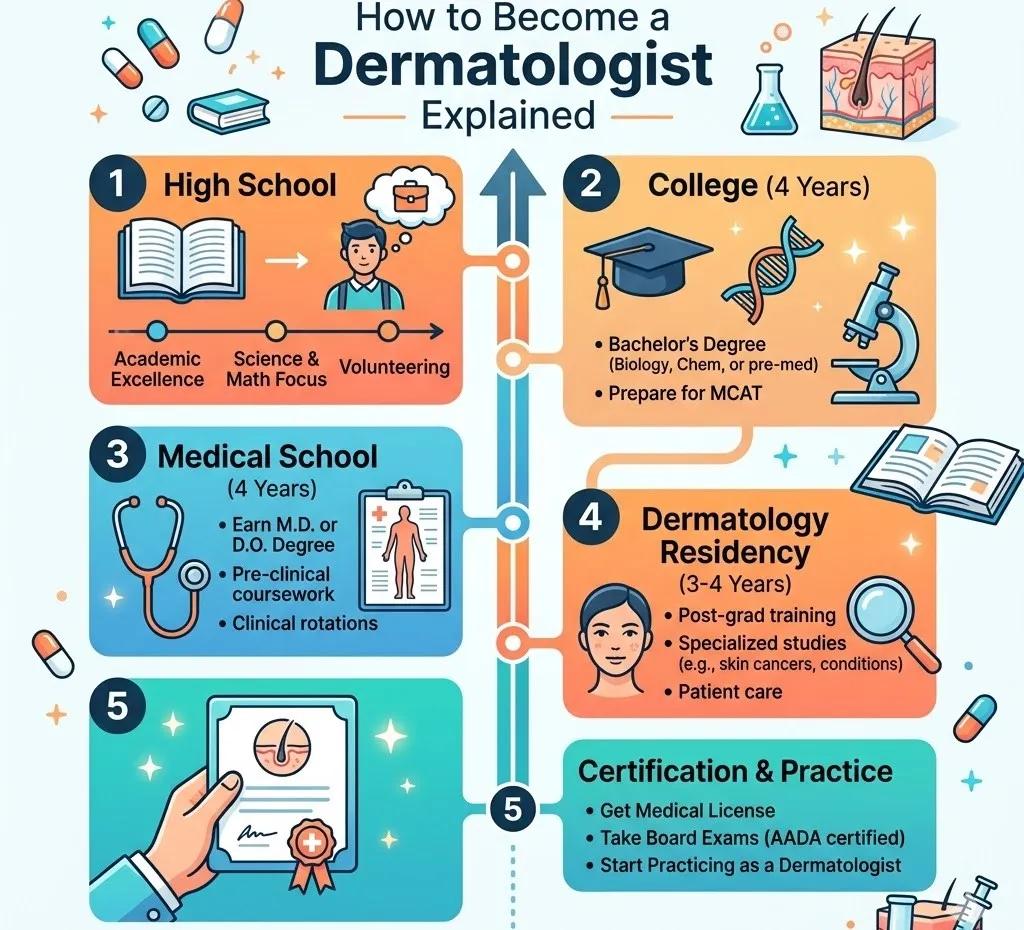
how-to-become-dermatologist
This training is based on data which will only cover the time period until October 2023, but newly created sub-areas of healthcare rapidly grow and have become more critical in importance due to changes in patient demographics. Dermatology is one of the most gratifying in demand specialties among these options. An increase in awareness concerning skin care, cosmetic procedures and preventive health combined with the escalating demand for trained dermatologists has fueled growth globally. Such programs provide aspiring medical professionals with great opportunities to build a successful and reputable career.
The Importance of understanding How to Become a Dermatologist the content, curriculum, and discipline of medicine are based on the combination of science and clinical practice; therefore, whether you are a student seeking to explore medical careers or a healthcare professional searching for specialization opportunities–obtaining the appropriate education and training is important. A professional Fellowship in Dermatology can help you expand your skills as it will equip you with the advanced clinical abilities necessary to remain competitive in a fast-evolving healthcare environment.
How to Become a Dermatologist Overview
The How to Become a Dermatologist details step by step process of education, training, and professional development needed to establish yourself as a skin specialist. Dermatologists are medical professionals who specialize in the diagnosis and treatment of skin conditions.
The path typically includes:
Higher secondary (sciences) completion
Earning a medical degree
Completing internship and clinical training
Pursuing postgraduate specialization in dermatology
Obtaining professional certifications and licenses
Engaging in lifelong learning and specialized further education
Dermatology specialists have become the experts in medical and cosmetic treatment whenever it comes to skin care, giving them consideration within hospitals and clinics at all economic levels of the country.
How Could You Benefit from It?
Factors like environmental pollution, lifestyle changes, stress and self-consciousness about looks have made skin diseases quite prevalent. This has led to dermatology being one of the most desirable medical specialties.
The growing importance of its increasingly contribution to the several reasons:
Increasing prevalence of skin disorders
The rapidly growing market for cosmetic and aesthetic procedures
Increased awareness among the public regarding skin health
Technological advancements in dermatological procedures
Telemedicine and digital healthcare services expansion
Knowing How to Become a Dermatologist allows people to land themselves in the middle of both clinical satisfaction and a career with longevity.
Key Skills and Knowledge You Learn
In turn, a successful dermatologist must have medical knowledge along with diagnostic and patient communication skills among others. Through training and specialization, professionals grow competencies that help support effective patient care.
Essential Skills Learned
Skin disease diagnosis and treatment
Clinical examination techniques
Dermatological procedure management
Cosmetic treatment knowledge
Patient counseling and communication
Research and evidence-based practice
Medical ethics and professionalism
Advanced clinical decision-making
A Diagnostic Fellowship in Dermatology strengthens these skills as supervised learning and the exposure to real-life cases enhance their expertise.
Professional Training Overview
A table summarizing a standard dermatology training route has been provided below.
Feature | Details |
|---|---|
Duration | The Duration can range from a few months to several years |
Eligibility | Medical Graduates or Healthcare Professionals |
Learning Mode | Online, Offline and/or Hybrid |
Key Skills | Diagnosis, Clinical Practice & Cosmetic procedures |
Career Opportunities | Dermatologist, Consultant, Researcher, Educator |
Certification/Support | Certification Guidance & career assistance |
Career Opportunities and Future Scope
The most important benefit of studying How to Become a Dermatologist is that you can explore various career options in different sectors of healthcare.
Career Paths in Dermatology
Clinical Dermatologist
Cosmetic Dermatologist
Dermatology Consultant
Medical Research Specialist
Academic Faculty Member
Teledermatology Expert
Hospital-Based Specialist
Private Practice Owner
Dermatology, despite being an exhausting specialty with a broad spectrum of pathologies around the world before 2023 has never had a better future.
Future Growth Opportunities
Advanced aesthetic medicine
Dermatological research
Skin cancer management
Telemedicine services
Personalized skincare treatments
Medical entrepreneurship
A career-oriented Fellowship in Dermatology directs professionals with opportunities for advanced roles and specialty practice within the field.
Advantages of Learning How to Become a Dermatologist
There are many reasons why dermatology is a great career option including personal satisfaction and professional opportunities.
Key Benefits
Strong earning potential
High demand for specialists
Diverse career pathways
Opportunities for specialization
Reasonable hours -- not as good as other professions but better than many in medicine
Continuous learning and innovation
How they can impact the quality of life for their patients
Dermatology invariably includes professionals who invest and meticulously understand How to Become a Dermatologist commonly enjoy successful career long-term.
Selecting the Right Course or Training
Choosing the correct education path is crucial for career success. However, not every program will be equal in terms of quality, exposure to practical work and how relevant it is to the industry.
Factors to Consider
Accreditation and Recognition
Go for programs that are accredited by recognized bodies and medical associations.
Curriculum Quality
Look for comprehensive coverage of:
Clinical dermatology
Cosmetic dermatology
Diagnostic techniques
Treatment protocols
Patient management
Practical Exposure
Getting your hands dirty is key to developing confidence and being good at it.
Faculty Expertise
Industry insights from experienced trainers and practising specialists
Career Support
Often worth more than their weight in gold are programmes which provide mentorship, guidance through certification and help with placement.
If you want to specialize in Dermatology, then a hands-on industry-based Fellowship can be an excellent option.
Selecting Professional Training Institute
A good training institute will really enhance your learning and career prospect. Besides, the right provider gives more than just theory – they teach practical skills and are job ready.
Benefits of Professional Training
Expert Trainers
Gain insights from practising dermatologists and healthcare professionals who have a clear grasp of the modern era.
Practical Learning
Case studies, hands-on and patient based clinical simulations helps in bringing real life scenarios to learning.
Industry-Oriented Curriculum
Some programs are in sync with the health services, the evolution of technology and patient care principles.
Career Support Services
Many institutes provide:
Career counseling
Interview preparation
Professional networking opportunities
Placement guidance
Certification Guidance
Most professional Fellowship in Dermatology programs include certification support, guiding learners to develop recognized credentials that add career credibility.
Industry Trends and Professional Growth
Dermatology continues to adapt to the continually evolving technology market, as well as patient needs. To succeed in the long run, you have to keep up with what is happening in your industry.
Current Industry Trends
Artificial intelligence in skin diagnosis
Advanced laser treatments
Teledermatology consultations
Personalized skincare solutions
Minimally invasive cosmetic procedures
Digital patient management systems
Professional Growth Opportunities
Advanced specialization programs
Clinical leadership positions
Academic and teaching roles
International practice opportunities
Research and innovation projects
Healthcare professionals that actively refine their expertise retain a competitive edge, and are ready for tomorrow.
Conclusion
It takes time and experience to build an effective career in dermatology you need the right education and continuing professional development. A Step by step Guide on Becoming a Dermatologist which gives you best example to start your career journey in one of the most respectable and advance medical field. The short and long term benefits are many from high level clinical skills over time to a multitude of career paths available in dermatology.
Thirdly, a professional Fellowship in Dermatology programs will deepen your knowledge of this subject and sharpen hands-on clinical skills as well as the chance for more job opportunities. For those eager to take their medical career to the next level, now is a perfect opportunity to research high-quality training and make strides toward being an adept dermatologist in patient care.
FAQs
1. What qualifications are required to become a dermatologist?
You usually have to go through a degree in medicine followed by foundation/ internship and specialty dermatology training. Further, you can also earn additional certifications to prove yourself.
2. Is dermatology a good career choice?
Yes. Strong Growth, Many Options and Market Outlook in Dermatology.
3. What is the benefit of a Fellowship in Dermatology?
Undergoing a fellowship allows you to complete more training, experience more hands-on clinical work, and learn advanced skills along with better career prospects in dermatology.
4. Can beginners start learning dermatology specialization?
The derm exam provides an avenue to educate and open pathways for students first entering dermatology (medical students and healthcare).
5. What career opportunities are available after dermatology training?
Graduates would either become clinical dermatologists, cosmetic consultants, private practitioners or researchers and educators depending on their qualifications.